Pages

Monday, April 13, 2015

The Hobbit: An Unexpected Journey

Source: Goodreads
A book for teens and young adults. If I read this book when I'm still a teen or young adult, I might have some problem understanding with the wide array of vocabularies that were used.

Some of the parts that I love most of the book is the first chapter where Gandalf gave a long reply to Bilbo's Good Morning. I never looked at "Good Morning" this way since it has long been embedded in my head that it is just courteous way of wishing someone in the morning.

Then the book moves on to "The unexpected Party" before the journey begins! How the dwarves came to his Bag End house, how they emptied his pantry and how fast and fun way to do cleaning till finally their final planning before heading out on the dangerous quest.

Another memorable part is the riddles between Bilbo and Gollum. Bilbo found Gollum in the Goblin cave and there while upon trying to find his way out, he played riddles with Gollum and found the magical ring. For one who has not a bright mind or much wit, I find the riddles difficult and amusing. I never thought of describing those things that way and if I have been Bilbo, I would have became Gollum's flavourful meal.

In the movie they showed the council meeting that Gandalf attended and the magical "verbal fight" between Galadriel and the Necromancer. I was hoping to read it in the book but of course it was only mentioned in a paragraph in the book.

Whatever I saw on screen is only a mention in the book. If you are expecting it to be the same, well don't get your hopes high.

Tolkien is a great writer. He described Hobbiton, Middle Earth, Mirkwood, The Lonely Mountain, home of Elrond beautifullt. If you have watched the movie, you would have journeyed through Middle Earth visually with the help of Peter Jackson and his team.

Now, open your mind and allow Tolkien to bring you on an amazing imaginative adventure.
Just note that some parts might feel a little draggy as there won't be much action. Nevertheless, it is an unexpected journey with lots of unexpected surprises by the little hobbit. (If you have watched the movie then it won't be that unexpected.)

Thursday, April 9, 2015

Play by the rules

Dear Readers,

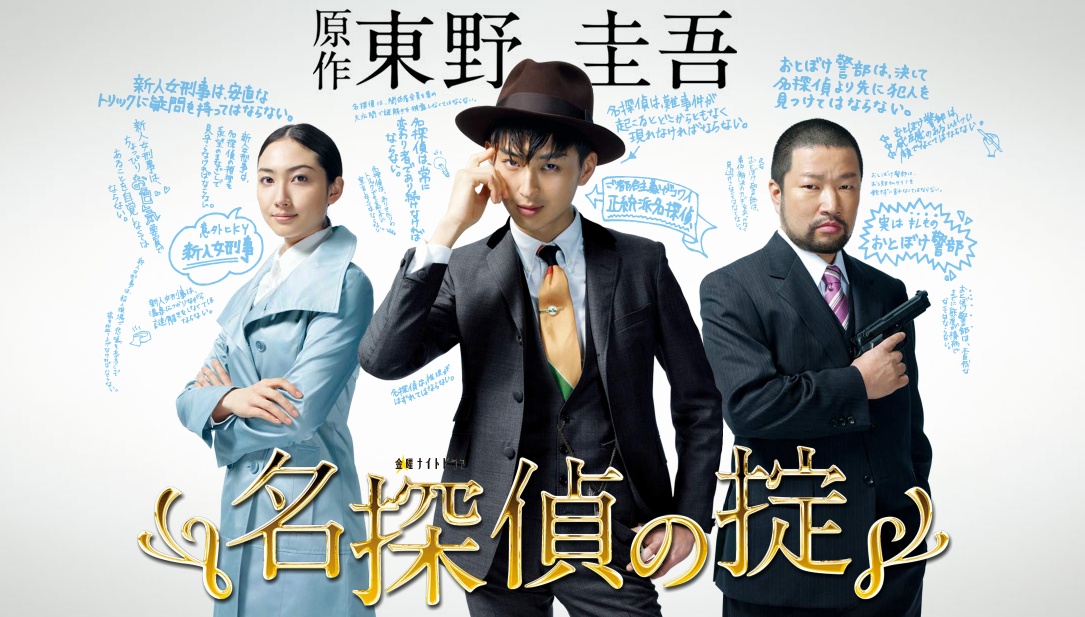
It's been a while and I am finally back, reading!  The book that I've picked is Higashino Keigo's "Meitantei no Okite/名探偵の掟" (Rules of a Detective/名偵探的守則.)


WHAT??? Another book by that author? Is this Higashino Mystery Book Club or Two Weeks A Book?

If that's your thoughts exactly, I’m really sorry! But "Meitantei no Okite" is really not your ordinary Japanese detective novel. It is a mockery of the genre/system clichés that it belongs to. A very ironic/sarcastic book!

Genre, is the classification of type when it comes to literature, television or films. It gives rise to such groups as the romance novel, the western, the gangster movie, film noir and so forth. (Sage Dictionary of Cultural Studies)

Anyway, there is a certain pattern or rule in Japanese detective literature and film/tv. If you think that only Korean dramas follow a certain format, you might find this book interesting.

Rule no.1
The investigators are always a combination of a police officer and detective. This detective is not from the police force, he can be a private detective, or someone related to the police officer.

Rule no.2
The police officer can never outsmart the detective. It is the officer's job to go to the wrong direction and suspect the wrong person. The detective is ALWAYS smarter than the officer.

Rule no.3
Just before closing the case, the detective will gather everybody involved in the case to gather at a crime scene and then, only will explain his deduction.


Ring a bell? Kindaichi, Detective Conan and many other Japanese detective series

Some cliché mentioned in the book includes

Cliche 1: Sealed room murder.
A gag that has been overly repeated and is still being used today. There is no such thing as a lock room, it ALWAYS ends up as a trick.

Cliche 2: Who did it?
A murder took place in a house/hotel. "The murderer is someone among us!" And it's always the most unexpected person who did it.

Cliche 3: Now its the time for a murder!
A heavy snow storm/ rain/ typhoon/ hurricane that prevents people from leaving and entering a certain area. Communication is cut off completely.. and the detective or police officer is coincidentally there!

Cliche 4: The dying message
The victim struggled really hard to write his/her last message. Usually it comes in some sort of code form. But...isn't it easier if the victim wrote the murderer's name instead?

Oh ya, then there won't be any chance for the detective to show his/her skills.

Well, if you're looking for some mockery of this genre to read, I highly recommend this book! Well, there's a TV series adaptation too..but meh, nothing beats the book.

Sunday, April 5, 2015

Who is the real Me?

Source: Amazon 
This book has been sitting in my book shelf for awhile, only started reading it when I saw the news about Leonardo DiCaprio is going to be Billy Milligan in the movie version of this story. 

This book is based on a real story, Billy Milligan is the first person who were not being charged for the crimes he committed as he has no memories of what he did. After he was arrested, the doctors soon confirmed that he has DID (Dissociative  Identity Disorder) which we usually known as split personalities. It was a result from severe abuses from his childhood, by Billy's stepfather. It was so bad that Billy not only had 3 personalities but 24 of them, each personalities exist for a reason, to protect Billy from any possible harm from the world. 

The book is very informative, and quite encouraging too. The lawyers and doctors were very helpful in the beginning, trying to treat Billy and help him get better, but this wasn't something that people could easily understand, especially in that time (The 80s). Many people doubt him, and think split personalities was just an act he put on, to get away from crime he committed. Yet, they didn't give up, things got better for awhile but got complicated again towards the end. It is a book that you have to follow through, to see the challenges, the struggles and the changes in Billy. 

In the book, you can see the good times and bad times he had, there were times he got better, merged back into one piece, but there were also time he split again, due to stress from outside world. Treating mental illness is a long time battle, because they are so fragile that little mistakes can push them back into their world, and it will take longer time to get them back. 

The public is more understanding about mental illness than Billy's time nowadays, but still many people are scared of people who have mental illness, because they don't understand it. Many people who surfer from it, are either being abused, mistreated or neglect during the time they grown up. Our minds are very fragile and this book can give you a very good understanding of the challenges, struggles and difficulties that these people have to face, from family, friends, public and the media. It wasn't easy and they are not as scary as people see them. 

Tuesday, March 17, 2015

Can You See it?

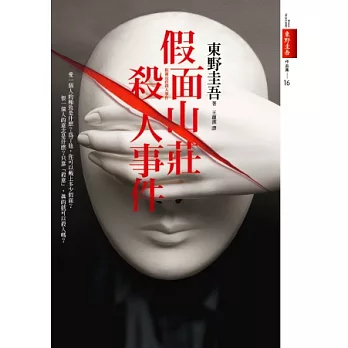
The Murder in Mansion Masquerade

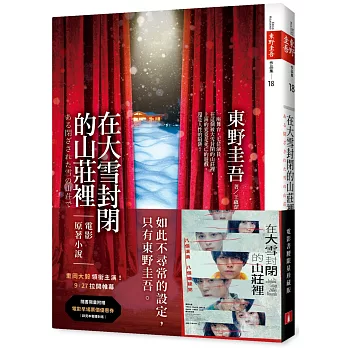
In a Mansion Covered with Snow

These two books are both written by Keigo Higashino, one of the greatest Japanese mystery novelist in my opinion. The reason I chose to write them together is simple, I finished both of them last week, and they have similar settings - the typical "Closed Circle" murder case where a group of people were trapped in a mansion or a place isolated to the outside world and murders happened, murderer usually among these people and they have to solve the case and save themselves. 

As this is a very popular setting in mystery crime novel, I am very curious how Higashino would handle it, since his stories never fail to surprise me! I have read plenty of his book, but not one time I could guess the ending correctly, so whenever I read his books now, even I feel like I know the answer, I will just tell myself it's Keigo Higashino, it is never that simple! And every single time, he tricked me, including in these two books. 

If I have to choose one between these two, I will go for The Murder in Mansion Masquerade, simply because it has more human touch to it, and the trick is quite unexpected. Throughout the story, Higashino trying to make reader believe one of the character is the killer, but when the ending comes, it was something that I didn't expect at all, not even slightly suspicious (isn't that the magic of Higashino). He is always so good at pointing you to the other direction.


After Mansion Masquerade, I immediately read the second book, thinking that from the first book, I might be able to find some similarities and maybe could see the answer this time. I wasn't completely wrong.  For the first time, I got some little parts correct,  but still can't get the big picture right. 


I guess this is why Higashino's books are so fascinating. Although he had published many books, each book are still very unique that they surprise readers every single time. So you will go and buy another of his book, take on the challenge, lose again, and a new one, and a new one...  


Monday, March 9, 2015

More than a Normal Crime Novel

Rokuyon by Hideo Yokoyama
This is a 555 pages book, and usually for a book this thick, it will take me maximum 2 weeks to finish it, but this one took me more than a month. It wasn't because it was not interesting, it simply because I underestimated the book. I thought it's going to be about a kidnap case, maybe with a few twists but after all it's only a straight forward story that I can finish very soon.  But apparently I was wrong, and this book is unlike any crime novels that I have read.

From the book name, you will probably think that it is about the kidnap case, but the kidnap case is just the background, or maybe a trigger, or a reason, but it wasn't the core part of this story.  You can even say the case is like the Pandora box, and it unleashed a series of events that could change the police force forever.

The main character of this story is the liaison of the police force, who used to work in the crime department, and at the beginning of the story, he already realized there is something "going on" between the local police force and the Tokyo HQ, some kind of politic battles. He was caught between them and this kidnap case is a weapon that both sides could use to fight for power. So he has to fight hard, not only to balance himself among them, when the two powers were fighting against each other. He also needs to do his job as a liaison and try to maintain a good relationship with the journalists which is very difficult at such time. And at home, there were things going on too, and he needs to find a way to fix his relationship with the wife. This is why I said it is not like any other crime novels, there are many layers in this story, and they are closely linked, although they seem unrelated. This is a book that you can't rush to finish, but need to take time, read slowly and digest, because you need to think and pay close attention to every detail.

Like other Japanese crime novels (maybe also the only similarity), there is a big twist at the end of the story, a twist that could hit you quite hard, you may have guessed it, or you may have felt something is wrong during your reading process, but still it will hit you. And it will become one of those stories that you will remember for a long long time, not the detail of the story but the feeling you have when you done reading it, how it moved you, how it amazed you and how you sat there and try so hard to calm your complex emotions after finished it.

Japanese always write really awesome crime stories, and never fail to amaze me, this one just take one step further, not only the story is great, all the humanity, emotions, feelings and smallest detail like simple dialogues are all perfectly thought through by the author, every word has a reason to be there and they are necessary to be there. In conclusion, I strongly recommend this book to all of you. =D My review may make this book sound very perfect, but trust me if you take your time to slowly read it and understand all the connections and detail in the story, you too, will be amazed.


Saturday, February 21, 2015

What is in your library?

Haruki Murakami's novella, The Strange Library (Taiwan version) is a pretty little hardcover, only 70 pages thick with Sheep Man and tiny gold specks on the front cover. So pretty, I cannot resist but grab a copy from the bookstore!

The short story was first published in the short story collection On Seeing The 100% Perfect Girl On One Beautiful April Morning back in the early 90s.

The Taiwanese Chinese version that I have is translated by 賴明珠 and includes illustrations by Kat Menschik from the German version. The illustrations are mainly grayscale with muted colours, very dark but elegant as well.

The story goes, as usual, very Murakami-esque:

A boy went to his local library intend to read up about tax collection during Ottoman empire. Unlike his usual trips, he was directed to a dark, creepy room underground by the librarian. There a strange, bald man led him through a maze of sorts, and then a small man covered with sheep skin locked him in a cell.

In the cell the boy is required to finish the 3 books the bald man has gave him, and which the bald man said will release after a month if he has finished the books. The truth was, however, that he might not end up alive.

That aside, the boy was fed extremely well by Sheep Man (great doughnuts) and met with a beautiful girl whose existence did not seem to be certain. In a peculiar way he found himself to be able to absorb the knowledge from the books much easier, and even able to experience the story itself. He also worried about his mother and his pet.

I always love the fantasy elements in Murakami's works, as if those alternate worlds do exist right here on Earth; and somebody we don't know is travelling through it. I am slightly disappointed that this is not quite a children's book (not an appropriate expectation); nevertheless I still adore the story and the accompanying illustrations a lot. My future trips to libraries will never be the same anymore.

p/s I wish I had browsed the English translations to get Ted Goossen's version instead :O

Saturday, February 14, 2015

Dance to a __ song

My first encounter with Milan Kundera, a Czech-born writer and one of the world's best known author, through his best-known book, The Unbearable Lightness of Being. I remembered not being able to understand the story, being less like a novel but more of his meditation about Life and Humanity. It was really easy to read but to digest is another thing.

Slowness (Le Lenteur) is written 11 years after the publication of Unbearable. Like the latter, Slowness is a light piece of reading (known as one of his lightest work) but it certainly is not as shallow as that.

The author weaves stories that happened in a midsummer's night of more than 200 years apart together. For a slim volume (140 pages in the Chinese translation, which I finished in less than 2 hours)

Throughout the novel, Kundera talks about how each and every one of us are performers (here he uses the word "dancers"), performing in front of everybody or think we are performing in front of everybody. Using different circumstances in the book, he explains the concept of "performance" either in politics, social etc., which relates to self-identity ("id", in Freud's term?):

When a person sees himself as elect, what can he do to prove his election, to make himself and others believe that he does not belong to the common herd? That is where the era founded on the invention of photography comes to the rescue, with its stars, its dancers, its celebrities, whose images, projected onto an enormous screen, are visible from afar by all, are admired by all, and are all beyond reach.
Kundera also uses the concept of speed to describe memory, sensuality, and modernity. There are particular quotes in the book that I quite like:
There is a secret bond between slowness and memory, between speed and forgetting. Consider this utterly commonplace situation: a man is walking down the street. At a certain moment, he tries to recall something, but the recollection escapes him.

Automatically, he slows down. Meanwhile, a person who wants to forget a disagreeable incident he has just lived through starts unconsciously to speed up his space, as if he were trying to distance himself from a thing still too close to him in time.

In existential mathematics, that experience takes the form of two basic equations: the degree of slowness is directly proportional to the intensity of memory; the degree of speed is directly proportional to the intensity of forgetting.
And this:
Why has the pleasure for slowness disappeared? Ah, where have they gone, the amblers of yesteryear? Where have they gone, those loafing heroes of folk song, those vagabonds who roam from one mill to another and bed down under the stars? Have they vanished along with footpaths, with grasslands and clearings, with nature? There is a Czech proverb that describes their easy indolence by a metaphor: "they are gazing at God's windows." A person gazing at God's windows is not bored; he is happy. In our world, indolence has turned into having nothing to do, which is a completely different thing: a person with nothing to do is frustrated, bored, is constantly searching for the activity he lacks.
At the end the stories fold itself back to the narrator. I found it rather peculiar, but cliche as well, as if I had seen it coming. I personally felt this cliche spoiled the story, but it may just be my personal taste. Honestly I read this book just to clear off my book shelves haha so it did not leave a deep impression to me. (It is also a disrespect to the author!) Alas, this book is not meant to be rushed to be enjoyed in slowness ;)

Also, just in time for Valentine's day:
The religion of orgasm: utilitarianism projected into sex life; efficiency versus indolence; coition reduced to an obstacle to be got past as quickly as possible in order to reach an ecstatic explosion, the only true goal of love-making and of the universe.
;)

Saturday, February 7, 2015

It Started With A Murder

If there's someone who can make me forget about playing Tetris and stay up really late to read, that person has got to be Keigo Higashino. Damn, I wish he wrote my text books.

Higashino is a Japanese author famed for his mystery novels. His writing style is clean, simple and he doesn't involves too many characters. I have no idea how he does this but I've read at least 20 of his works and yet he surprises me every single time. There may be a some overlapping themes (femme fatale, dishonesty, revenge) but his approach differs from each book. From a scientific narrative to a melo-drama David Lynch-esque complexity.. you name it.

Anyway, for my third book, I've picked "The Case of 11 Letters" and did I mentioned that Higashino never fails to impress?


A series of suspicious deaths, starting with that of her boyfriend Kawazu Masayuki, prompts mystery novelist Yuki Rikako to investigate. In their last meeting, he tells her he thinks someone may be targeting him. When she asks why he feels threatened, he’s very noncommittal. And one by one, people who are somewhat linked to her boyfriend are being murdered.

As she digs deeper, she discovers that all the victims were once passengers on the same cruise ship a year ago and involved in an accident that left one man dead. What happened on the cruise ship? Was the man murdered or was it an accident? Is someone seeking for revenge?

If I have to pick something about this story, I feel that the last murder was a little out of place/ coherence feels off. Turns out that this murder has got to do with the big reveal. I kind of saw this coming but Higashino being Higashino, adds a little twist. This little twist is not so much about 'who did it' or 'how did it happened' but it is something that every mystery novel should have.


Thursday, February 5, 2015

Kokuhaku こくはく Confessions

Kokuhaku means "confessions" in English. The Japanese has a kokuhaku culture in which the men/women confess their love/feelings to each other. If the confession cum proposal is accepted, they will officially start dating each other/be in a serious relationship!

It has been a week since I finished reading Confessions by Kanae Minato (Mandarin translation version, 告白); and until today whenever I thought of the book, I still feel really disturbed.

Confessions started off with a goodbye speech given by a teacher of a middle school, Yuko Moriguchi, who was retiring after her daughter was found dead in the pool not long ago. She later revealed that her daughter's death was not accidental, but a murder conducted by two students in her class, making them recognisable to the rest of the students without giving out their names. Before she left, she unveiled her revenge plan - taint the milk of the 2 students, Shuuya Watanabe and Naoki Shimomura, with HIV-tainted blood.

The rest of the story proceeded with different points of view given by different characters, peeling the layers one by one of a seemingly simple crime story. I thoroughly enjoyed how the story gets deeper as it goes, stories behind stories; and when there is nothing left to be uncovered, be prepared to be surprised with the conclusion.

Moriguchi-sensei decided against reporting the case to the police as the Japanese law do not punish juveniles harshly, and felt it was best to take it to her own hands. She succeeded, and very well indeed. No-one was left unaffected. Strings of bully cases, social disruption, more murders - did Moriguchi-sensei want to take revenge against the two students only, or bring everyone else down with them?

And what about justice? How much justice is enough?

The narration of the story flows really well even with different perspectives of the story told. Each page is packed with shocks and twists, making it impossible to leave the book until you reach the last page.

Minato was a housewife before she became famous with this book. I really wonder what goes on in the minds of the average Japanese.

p/s I love this review of the book!

Tuesday, January 27, 2015

The Uninvited by Geling Yan

Source: Google Images
I bought the book first before reading the review online. The back cover of the book have promised an ending full of anticipation and raised my curiosity which led to the purchase.

The pace I started the book was at my normal speed (not too slow, not too fast) and consistent till I got to the middle part where things slowed down. Do not have the time to read will be an excuse as it is more like I do not want to continue for I am at lost with the story and have lost the characters. 

Finally I reached the ending which turns out not to be as big of an ending as I have expected it to be from reading the back cover. The impression it gave me was there will be a big ending but as I finally reached the end, I felt as if it has not ended. As if it had ended abruptly and I am now left hanging.

Out with the bad, here comes the part that I enjoyed. 

What I like about the book is the way it has written about the culture in China. It is well described and has shows a different culture. It makes me think if it the same happens elsewhere? 

The book is an in between of good and bad for me. Not to say it is a must read but if you are interested to know about China, you can give it a go. 


I, for one, will not mind giving it a second chance to see if I'll have a different opinion and appreciate the story better. 

Monday, January 26, 2015

"I Have Done the Deed"

My first exposure to Javier Marias was a short story (read by Miette from Miette's Bedtime Story Podcast) called While the Women are Sleeping. I admired how he built his plot very slowly with seemingly ordinary scenes and conversations - and then a bang and you're left, together with the narrator, to think through what really just happened. (I wrote a short review here.)

A Heart So White - Javier MariasA Heart So White opened with the suicide of the wife of a newly wed couple, just off from their honeymoon. Gun to the heart, bam! off Teresa went to the other world.

The husband of the couple is Ranz, Juan's father.

Juan did not know much about his father's personal life, besides the fact that Teresa is his mother's elder sister. Juan did not ask for details; and when he did, Ranz refuse to divulge any information to him.

Juan marries Luisa, who, like him, is a translator and interpreter for various government bodies and organisations. He is extremely sensitive to words - or, more accurately, the act of interpreting words, of interpretation itself. For every scenes or events that unfold before him, he would, consciously or unconsciously, contemplate and interpret the meaning behind.

So how did the title of the book come about?

My hands are of your colour but I shame
To wear a heart so white.
-- Macbeth, William Shakespeare

Throughout the novel Marias interweaves the theme in a series of seemingly unrelated and trivial events. We see how the theme evolve in these events, and slowly begun to see - but only the tip of an iceberg - of what the author has in mind.

I personally think it is extremely intelligent of him to write this way. It was quiet for perhaps the first 3/4 of the book, and at the end we see the theme again, but written like a musical piece, a crescendo to a sforzando and then back to piano. (I really love the ending!) The events, the meanings behind these events, layer upon each other, weave by the common theme from that line of Macbeth; but there seems to be something beneath all these, a core theme. What is it?

That is, perhaps, what the author wants you to do - find your own interpretation.

One important thing to note about Marias is that he writes without a plot in mind; and he does not go back to whatever he has written, he just moves on from where he has stopped, which may explain this: Marias lets Juan think in long paragraphs, even during a conversation. The words loop around and around a single idea - do it few more times (just like how humans get obsessed with certain ideas/thoughts and repetitively think of it) and I feel like yelling at Juan/Marias to get straight to the point!

Oh, one thing that annoys me - why don't the female characters have any character? To me, they seemed to exist as purely a medium to get across what is on the author's mind. Even the minor male characters such as Custardoy the Younger gets more personality than Luisa. I wonder if it's the Spanish machismo.

Reading this book felt like reading Marias's thoughts. There are parts where it seemed that he/Juan is quite against the institution of marriage - no, scratch that - more like he is against the notion of getting into marriage without a purpose, doing just for the sake of it. Being a 20-something with friends who dream of/is getting married, I do find it quite comforting to know there are someone out there who shares the same thoughts as me - do we do things just for the sake of it, going with society's standard?

It is only 288 pages but you are definitely not going to finish in one sitting. Too heavy for that. Repetitions can get quite tiring, really, but I would say this is one brilliant book that I would go back again and again.

p/s The paperback published by Random House UK is wonderful, it doesn't crease at the spine nor does the cover "floats up"!! We need good binding like this :D

Read: Javier Marias interview on The Paris Review; Interview on The White ReviewGoodreads page

Sunday, January 25, 2015

Strawberry Shortcake

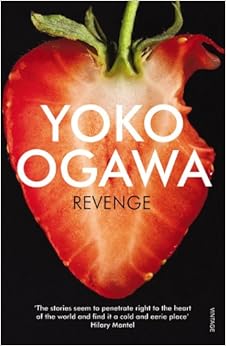
Every time I visit another country, I make a point to buy a book from the airport's bookstore. During my recent trip to Siem Reap, Cambodia, I've picked up two books and one of them is Yoko Ogawa's Revenge.

I have a love-hate relationship when it comes to collection of short stories. Sometimes it just doesn't make sense, or when you're just about to get to the core of the content, the story ended. But I really like it when I'm lucky or smart enough to notice the thematic structure that binds the stories together. And Revenge? Definitely one of the best collection of short stories I've ever read!

Revenge is composed of 11 disturbingly eerie stories that brilliantly pulls together a seemingly disconnected cast of characters. Strawberry shortcake, kiwi fruits, carrots, museum of torture, Bengal tigers... These short stories can be read individually yet they are interconnected, with the last one looping back to the first story.

What I really like about this book is..it is very inviting. Aside from the well crafted storyline, the curiosity on how will the next story links to the previous story will keep you reading. This book also explores the dark side of the most ordinary me and you. Everyday people, going through everyday struggles, dealing with complicated relationship. There are fear, jealousy, paranoia, feeling of longing.. It's all very real, relatable and maybe to a certain extend, it is what you secretly wants to do.

This post is so hard to write cause I don't want to talk about the story and spoil the fun of reading it. If you do plan to read this book, please read it in order.


Thursday, January 15, 2015

Make a wish?

Image from Amazon
I always want to read one of Alexandra Potter's books, only because they all have pretty covers (Can't help but judge a book by its cover). So here I am, after lying in my bookshelf for quite sometimes, I picked this as my first 2015 book.

It wasn't bad, but forgive me for being blunt, it is ordinary and cliche. There are many stories that are cliche and ordinary, but they dig deep into your emotions, and this book definitely could have done better in the emotional bits.

However, the message of the book is loud and clear, as the title said "Be Careful What You Wish For". Main character of this book is a British named Heather, she is 30 and single and going nowhere in her career, so she started wishing for tiny little things, and one day, after she met a gypsy, her wishes started to come true, big or small wishes. As she started getting what she wished, she begins to realize these things that seem so good, are not what she actually needs, because she doesn't feel happy.

There are times in our life when we wanted things, maybe better salary, or a position in an international company,  or to meet a guy that fits our perfect man checklist, just as Heather did. We want these things, because we don't have them, but we wouldn't know if these are the things that really suit us or are they what we really need, until it actually happens. It is often easier to know what we don't want, than to know what we actually want. Hence, be careful what you wish for.

I would say this book can be a good read during your free time, if you want a simple story that could make you smile, not too much twists and turns. But it isn't a book that you are going to remember for a long time, and definitely not something that worth reading a second time.

Sunday, January 11, 2015

Of a flying - maybe - chicken

I got attracted to this book because of the clean and cute, minimalistic design of the cover; as well as the presence of an animal - a flying chicken, really? - on its title. Based on the first page, I thought it would be quite a humorous read.

The Hen Who Dreamed She Could Fly (Goodreads page) started off with a hen named Sprout, trapped in a coup laying eggs for farmers, dreaming of freedom outside the coup, of hatching her own egg and taking care of her own chicks. With naive, half-baked plans and strong determination, she freed herself from the barn system - but realised the outside world wasn't as rosy as it seemed.

Out there, she met little friends but many foes; she witnessed life and death in front of her eyes; she gave out love as generously as she possibly could. All in all, she lived graciously and elegantly.

Do not dismiss this animal fable as another children's literature. It is as realistic and metaphorical as it gets. Despite the simple storyline, The Hen in essence is not as simple as the traditional fairy tales. It makes you ponder on life, family, morality and mother nature itself. Finishing the book left the same empty feeling I get whenever I finished a good book - so many lessons learned, so many unanswered questions left for me to contemplate.

Hwang describes well, and her language (after translation, at least) was not complicated. The many animal characters (minor & major) in the book - reminiscence of Animal Farm and Charlotte's Web - are as human as they can get. Nomoco's illustrations (including the cover) are raw and somehow reminded me of white, wintry North Korea. Don't know why.

My personal taste tells me the story ended somewhat cliche and emotional, it is, nevertheless, a good way to end. When/if I have children, I will read them this story. They need to know the world is not only about happy endings.

This book is so good I will not sell it away!

Author: Sun-mi Hwang
Translator: Chi-young Kim
Illustrator: Nomoco

Thursday, January 1, 2015

It Started With a Fall

Image source: Amazon
"I'm not most kids. I'm Louis Drax. Stuff happens to me that shouldn't happen, like going on a picnic where you drown."

I've always liked psychological/crime thriller so when I came across Liz Jensen's "The Ninth Life of Louis Drax" at a book fair, the title just sucked me in and I knew that I need to read this book.

People say don't judge a book by its cover and boy they are right. When I saw the title, I assumed that perhaps this book is about a boy who suffered from multiple personality disorder. Maybe he was traumatised... Turns out that I was in for another kind of ride (the 'ninth' here actually refers to his age).

Louis Drax is no ordinary boy. He is bright, precocious, and dangerously, disturbingly accident prone. At eight years old, he has experienced many accidents, some major, some smaller. But during a family outing to celebrate his ninth birthday, Louis falls off a cliff into a ravine and lapses into a deep coma. He was transferred to a clinic and Dr Dannachet tries to coax him back to consciousness. But the boy defies medical logic and the good doctor is drawn deeply into the heart of Louis' buried world. Only Louis holds the key to the mystery and he can't communicate...or can he?

Personally, I think Jensen did a brilliant job in terms of storytelling. She addressed every bit of details well and it was a very engaging read. Nothing was left hanging. The excitement (and disturbing-ness) of reading the early chapters were so strong that I couldn't put down the book once I've started it.

However, as I am a big fan of this genre, I was expecting a little bit more. Or maybe I was reading from a structuralist approach? I was preoccupied with identifying the patterns and that sort of laid out the ending for me.

It's a simple book to read (not so much for kids, maybe young adults) and at some point it reminded me of Mark Haddon's "The Curious Incident of the Dog in the Night-Time". There's a couple of common elements such as parenting, problem child, pets and first person narrative (again structuralist approach!) But that's about it. They're quite different and this one moves at a faster pace.


Not revolutionary but definitely worth a read.