Pages

Showing posts with label Japanese. Show all posts

Thursday, April 9, 2015

Play by the rules

Dear Readers,

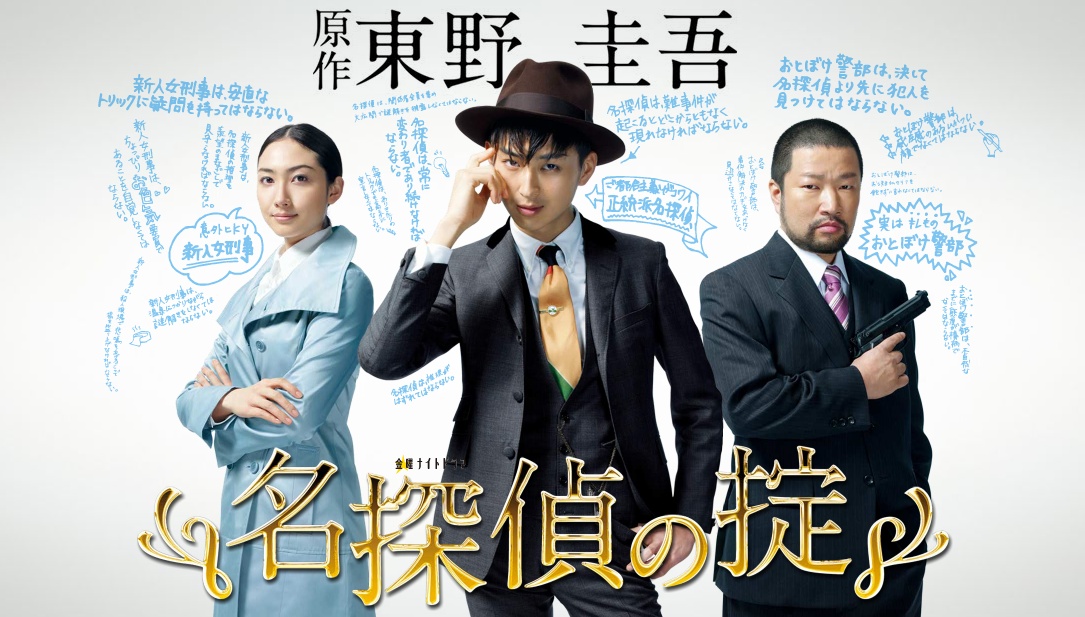
It's been a while and I am finally back, reading!  The book that I've picked is Higashino Keigo's "Meitantei no Okite/名探偵の掟" (Rules of a Detective/名偵探的守則.)


WHAT??? Another book by that author? Is this Higashino Mystery Book Club or Two Weeks A Book?

If that's your thoughts exactly, I’m really sorry! But "Meitantei no Okite" is really not your ordinary Japanese detective novel. It is a mockery of the genre/system clichés that it belongs to. A very ironic/sarcastic book!

Genre, is the classification of type when it comes to literature, television or films. It gives rise to such groups as the romance novel, the western, the gangster movie, film noir and so forth. (Sage Dictionary of Cultural Studies)

Anyway, there is a certain pattern or rule in Japanese detective literature and film/tv. If you think that only Korean dramas follow a certain format, you might find this book interesting.

Rule no.1
The investigators are always a combination of a police officer and detective. This detective is not from the police force, he can be a private detective, or someone related to the police officer.

Rule no.2
The police officer can never outsmart the detective. It is the officer's job to go to the wrong direction and suspect the wrong person. The detective is ALWAYS smarter than the officer.

Rule no.3
Just before closing the case, the detective will gather everybody involved in the case to gather at a crime scene and then, only will explain his deduction.


Ring a bell? Kindaichi, Detective Conan and many other Japanese detective series

Some cliché mentioned in the book includes

Cliche 1: Sealed room murder.
A gag that has been overly repeated and is still being used today. There is no such thing as a lock room, it ALWAYS ends up as a trick.

Cliche 2: Who did it?
A murder took place in a house/hotel. "The murderer is someone among us!" And it's always the most unexpected person who did it.

Cliche 3: Now its the time for a murder!
A heavy snow storm/ rain/ typhoon/ hurricane that prevents people from leaving and entering a certain area. Communication is cut off completely.. and the detective or police officer is coincidentally there!

Cliche 4: The dying message
The victim struggled really hard to write his/her last message. Usually it comes in some sort of code form. But...isn't it easier if the victim wrote the murderer's name instead?

Oh ya, then there won't be any chance for the detective to show his/her skills.

Well, if you're looking for some mockery of this genre to read, I highly recommend this book! Well, there's a TV series adaptation too..but meh, nothing beats the book.

Tuesday, March 17, 2015

Can You See it?

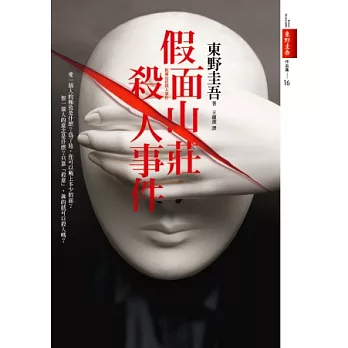
The Murder in Mansion Masquerade

In a Mansion Covered with Snow

These two books are both written by Keigo Higashino, one of the greatest Japanese mystery novelist in my opinion. The reason I chose to write them together is simple, I finished both of them last week, and they have similar settings - the typical "Closed Circle" murder case where a group of people were trapped in a mansion or a place isolated to the outside world and murders happened, murderer usually among these people and they have to solve the case and save themselves. 

As this is a very popular setting in mystery crime novel, I am very curious how Higashino would handle it, since his stories never fail to surprise me! I have read plenty of his book, but not one time I could guess the ending correctly, so whenever I read his books now, even I feel like I know the answer, I will just tell myself it's Keigo Higashino, it is never that simple! And every single time, he tricked me, including in these two books. 

If I have to choose one between these two, I will go for The Murder in Mansion Masquerade, simply because it has more human touch to it, and the trick is quite unexpected. Throughout the story, Higashino trying to make reader believe one of the character is the killer, but when the ending comes, it was something that I didn't expect at all, not even slightly suspicious (isn't that the magic of Higashino). He is always so good at pointing you to the other direction.


After Mansion Masquerade, I immediately read the second book, thinking that from the first book, I might be able to find some similarities and maybe could see the answer this time. I wasn't completely wrong.  For the first time, I got some little parts correct,  but still can't get the big picture right. 


I guess this is why Higashino's books are so fascinating. Although he had published many books, each book are still very unique that they surprise readers every single time. So you will go and buy another of his book, take on the challenge, lose again, and a new one, and a new one...  


Monday, March 9, 2015

More than a Normal Crime Novel

Rokuyon by Hideo Yokoyama
This is a 555 pages book, and usually for a book this thick, it will take me maximum 2 weeks to finish it, but this one took me more than a month. It wasn't because it was not interesting, it simply because I underestimated the book. I thought it's going to be about a kidnap case, maybe with a few twists but after all it's only a straight forward story that I can finish very soon.  But apparently I was wrong, and this book is unlike any crime novels that I have read.

From the book name, you will probably think that it is about the kidnap case, but the kidnap case is just the background, or maybe a trigger, or a reason, but it wasn't the core part of this story.  You can even say the case is like the Pandora box, and it unleashed a series of events that could change the police force forever.

The main character of this story is the liaison of the police force, who used to work in the crime department, and at the beginning of the story, he already realized there is something "going on" between the local police force and the Tokyo HQ, some kind of politic battles. He was caught between them and this kidnap case is a weapon that both sides could use to fight for power. So he has to fight hard, not only to balance himself among them, when the two powers were fighting against each other. He also needs to do his job as a liaison and try to maintain a good relationship with the journalists which is very difficult at such time. And at home, there were things going on too, and he needs to find a way to fix his relationship with the wife. This is why I said it is not like any other crime novels, there are many layers in this story, and they are closely linked, although they seem unrelated. This is a book that you can't rush to finish, but need to take time, read slowly and digest, because you need to think and pay close attention to every detail.

Like other Japanese crime novels (maybe also the only similarity), there is a big twist at the end of the story, a twist that could hit you quite hard, you may have guessed it, or you may have felt something is wrong during your reading process, but still it will hit you. And it will become one of those stories that you will remember for a long long time, not the detail of the story but the feeling you have when you done reading it, how it moved you, how it amazed you and how you sat there and try so hard to calm your complex emotions after finished it.

Japanese always write really awesome crime stories, and never fail to amaze me, this one just take one step further, not only the story is great, all the humanity, emotions, feelings and smallest detail like simple dialogues are all perfectly thought through by the author, every word has a reason to be there and they are necessary to be there. In conclusion, I strongly recommend this book to all of you. =D My review may make this book sound very perfect, but trust me if you take your time to slowly read it and understand all the connections and detail in the story, you too, will be amazed.


Saturday, February 21, 2015

What is in your library?

Haruki Murakami's novella, The Strange Library (Taiwan version) is a pretty little hardcover, only 70 pages thick with Sheep Man and tiny gold specks on the front cover. So pretty, I cannot resist but grab a copy from the bookstore!

The short story was first published in the short story collection On Seeing The 100% Perfect Girl On One Beautiful April Morning back in the early 90s.

The Taiwanese Chinese version that I have is translated by 賴明珠 and includes illustrations by Kat Menschik from the German version. The illustrations are mainly grayscale with muted colours, very dark but elegant as well.

The story goes, as usual, very Murakami-esque:

A boy went to his local library intend to read up about tax collection during Ottoman empire. Unlike his usual trips, he was directed to a dark, creepy room underground by the librarian. There a strange, bald man led him through a maze of sorts, and then a small man covered with sheep skin locked him in a cell.

In the cell the boy is required to finish the 3 books the bald man has gave him, and which the bald man said will release after a month if he has finished the books. The truth was, however, that he might not end up alive.

That aside, the boy was fed extremely well by Sheep Man (great doughnuts) and met with a beautiful girl whose existence did not seem to be certain. In a peculiar way he found himself to be able to absorb the knowledge from the books much easier, and even able to experience the story itself. He also worried about his mother and his pet.

I always love the fantasy elements in Murakami's works, as if those alternate worlds do exist right here on Earth; and somebody we don't know is travelling through it. I am slightly disappointed that this is not quite a children's book (not an appropriate expectation); nevertheless I still adore the story and the accompanying illustrations a lot. My future trips to libraries will never be the same anymore.

p/s I wish I had browsed the English translations to get Ted Goossen's version instead :O

Saturday, February 7, 2015

It Started With A Murder

If there's someone who can make me forget about playing Tetris and stay up really late to read, that person has got to be Keigo Higashino. Damn, I wish he wrote my text books.

Higashino is a Japanese author famed for his mystery novels. His writing style is clean, simple and he doesn't involves too many characters. I have no idea how he does this but I've read at least 20 of his works and yet he surprises me every single time. There may be a some overlapping themes (femme fatale, dishonesty, revenge) but his approach differs from each book. From a scientific narrative to a melo-drama David Lynch-esque complexity.. you name it.

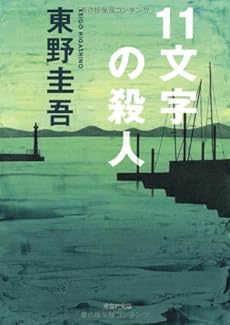
Anyway, for my third book, I've picked "The Case of 11 Letters" and did I mentioned that Higashino never fails to impress?


A series of suspicious deaths, starting with that of her boyfriend Kawazu Masayuki, prompts mystery novelist Yuki Rikako to investigate. In their last meeting, he tells her he thinks someone may be targeting him. When she asks why he feels threatened, he’s very noncommittal. And one by one, people who are somewhat linked to her boyfriend are being murdered.

As she digs deeper, she discovers that all the victims were once passengers on the same cruise ship a year ago and involved in an accident that left one man dead. What happened on the cruise ship? Was the man murdered or was it an accident? Is someone seeking for revenge?

If I have to pick something about this story, I feel that the last murder was a little out of place/ coherence feels off. Turns out that this murder has got to do with the big reveal. I kind of saw this coming but Higashino being Higashino, adds a little twist. This little twist is not so much about 'who did it' or 'how did it happened' but it is something that every mystery novel should have.


Thursday, February 5, 2015

Kokuhaku こくはく Confessions

Kokuhaku means "confessions" in English. The Japanese has a kokuhaku culture in which the men/women confess their love/feelings to each other. If the confession cum proposal is accepted, they will officially start dating each other/be in a serious relationship!

It has been a week since I finished reading Confessions by Kanae Minato (Mandarin translation version, 告白); and until today whenever I thought of the book, I still feel really disturbed.

Confessions started off with a goodbye speech given by a teacher of a middle school, Yuko Moriguchi, who was retiring after her daughter was found dead in the pool not long ago. She later revealed that her daughter's death was not accidental, but a murder conducted by two students in her class, making them recognisable to the rest of the students without giving out their names. Before she left, she unveiled her revenge plan - taint the milk of the 2 students, Shuuya Watanabe and Naoki Shimomura, with HIV-tainted blood.

The rest of the story proceeded with different points of view given by different characters, peeling the layers one by one of a seemingly simple crime story. I thoroughly enjoyed how the story gets deeper as it goes, stories behind stories; and when there is nothing left to be uncovered, be prepared to be surprised with the conclusion.

Moriguchi-sensei decided against reporting the case to the police as the Japanese law do not punish juveniles harshly, and felt it was best to take it to her own hands. She succeeded, and very well indeed. No-one was left unaffected. Strings of bully cases, social disruption, more murders - did Moriguchi-sensei want to take revenge against the two students only, or bring everyone else down with them?

And what about justice? How much justice is enough?

The narration of the story flows really well even with different perspectives of the story told. Each page is packed with shocks and twists, making it impossible to leave the book until you reach the last page.

Minato was a housewife before she became famous with this book. I really wonder what goes on in the minds of the average Japanese.

p/s I love this review of the book!